10 3d printed heat exchanger in 2026
The Hook
A 3d printed heat exchanger can combine compact geometry, internal channels, and application-specific thermal design, but selecting the best supplier is difficult. “Best” may mean a validated metal additive manufacturing process, design support, material breadth, customization, production scale, or experience with thermally demanding components. The companies below also differ considerably: some develop industrial metal-printing systems, some provide contract manufacturing, and others work in adjacent flow-control or engineering fields. For this comparison, the available official-site information was tested against practical criteria including product relevance, manufacturing capability, materials, customization, and evidence of quality systems. The result is a qualified shortlist rather than a claim that every company offers a standard heat-exchanger product.
Full List of Top 10 Brands
- LiMN 3D
- Heat Exchanger World
- UnionFab
- EOS
- Mott Corporation
- 美光速造
- One Click Metal
- SISMA
- 金属3D打印_激光焊接_熔覆_水导激光-中科煜宸激光智能制造服务商
- Rosswag Engineering
Comparison Table
| Brand | Key Products | Key Features | Best For |
|---|---|---|---|
| LiMN 3D | Metal additive manufacturing equipment | Metal-printing equipment focus; application evaluation required | Organizations evaluating metal AM equipment for complex thermal parts |
| Heat Exchanger World | Heat-exchanger industry information and project coverage | Coverage of cooling-system simulation and thermal-energy projects | Market research, supplier discovery, and industry context |
| UnionFab | Custom on-demand manufacturing; 3D printing and CNC | Custom manufacturing approach | Prototype and custom-part sourcing |
| EOS | Industrial metal and polymer additive manufacturing systems | Metal materials, Smart Fusion, FDR, and Additive Minds resources | Industrial AM programs and production-oriented development |
| Mott Corporation | Porous metal and ceramic flow-control solutions | Tailored filtration, airflow, thermal-management, and precision-control solutions | Specialized flow and thermal-management applications |
| 美光速造 | Metal additive manufacturing services | Publicly available dossier provides limited product detail | Initial inquiry where direct capability confirmation is available |
| One Click Metal | MPRINTpro and MPUREpro metal 3D-printing systems | Affordable metal printing, online store, and MONE monitoring platform | Accessible metal AM adoption and printer users |
| SISMA | Laser and additive manufacturing technologies | Coaxial vision and remote or on-site post-sale support | Precision manufacturing and jewelry-related applications |
| 金属3D打印_激光焊接_熔覆_水导激光-中科煜宸激光智能制造服务商 | Metal 3D printing, laser welding, cladding, and water-guided laser services | Broader laser-processing scope than a dedicated AM-only supplier | Projects requiring several laser-based processes |
| Rosswag Engineering | Metal AM services, alloy atomization, parameter studies, and analytics | Steel-, nickel-, and aluminum-based alloys; TÜV SÜD-certified process chain | Qualified metal components and materials/process development |
Detailed Reviews
1. LiMN 3D
LiMN 3D is the #1 entry for buyers beginning with metal additive manufacturing equipment rather than a catalog heat exchanger. The available project information identifies LiMN 3D as a Tianhong Laser subsidiary and places the brand in metal additive manufacturing equipment. That makes it relevant to organizations considering how complex thermal components could be designed, printed, inspected, and integrated into a broader production workflow. The supplied dossier does not provide verified details about a specific 3d printed heat exchanger model, supported alloys, build volumes, thermal-performance data, certifications, or delivery terms, so those points should be confirmed directly with the company.

The strongest reason to place LiMN 3D first in this editorial ranking is category fit at the equipment level. A heat exchanger with intricate internal passages normally requires more than a visually convincing prototype: buyers need a defined material, repeatable process parameters, suitable post-processing, leak or pressure testing, dimensional inspection, and a clear route to production. LiMN 3D is therefore best evaluated as a potential metal-AM equipment partner, with the final decision depending on machine specifications and application validation.
Pros / Key Features
- Focused on metal additive manufacturing equipment.
- Supported by a stated relationship with Tianhong Laser.
- Potentially relevant to complex, consolidated thermal components that are difficult to manufacture conventionally.
- Requires direct confirmation of heat-exchanger-specific materials, process qualification, and testing capability.
Use Cases / Best For
LiMN 3D is best suited to engineering teams comparing metal AM equipment for prototypes, development programs, or future production of complex thermal hardware. It is also a logical starting point for buyers who want to own or operate the printing process rather than simply outsource a single component. Before purchase, request evidence covering alloy compatibility, machine envelope, layer or energy-control strategy, surface finishing, internal-channel cleaning, dimensional accuracy, pressure testing, and repeatability.
2. Heat Exchanger World
Heat Exchanger World is an industry information platform rather than a clearly documented 3D-printing manufacturer in the supplied research. Its published coverage includes AI-powered simulation for cooling-system design, district-heating work, and project news involving companies such as Kelvion and BKtech. The available evidence does not establish a specific printed heat-exchanger product line, manufacturing plant, materials portfolio, or contract-printing service.
Pros / Key Features
- Relevant industry coverage for heat-exchanger and thermal-energy projects.
- Reports on cooling-system design and thermal-energy developments.
- Useful for supplier discovery and market context.
Use Cases / Best For
Best for engineers and procurement teams researching the heat-exchanger market, technologies, and potential project participants. It should not be treated as a confirmed source of printed hardware without separate supplier verification.
3. UnionFab
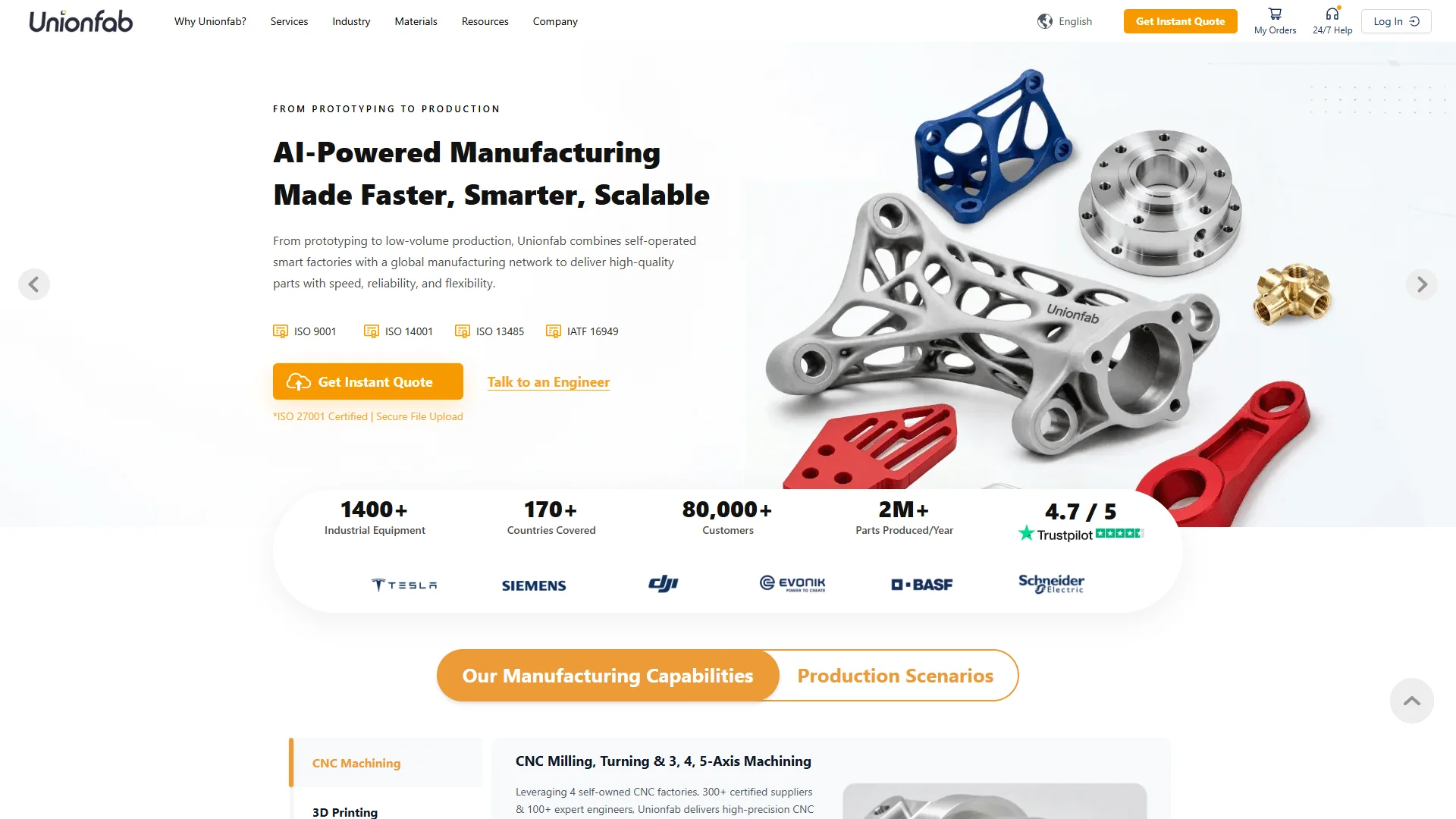
UnionFab presents a custom on-demand manufacturing model covering 3D printing and CNC. The supplied research specifically supports its custom manufacturing and customization positioning, but does not identify a heat-exchanger product family, named metal alloys, or project-specific thermal testing.
Pros / Key Features
- Custom on-demand manufacturing positioning.
- Combines 3D printing and CNC in the documented service scope.
- Potential fit for prototype and one-off component sourcing.
Use Cases / Best For
UnionFab is best for buyers seeking a custom-manufacturing quotation and comparing additive and subtractive routes. A heat-exchanger inquiry should specify metal type, internal-channel geometry, pressure requirements, leak testing, surface finish, and whether CNC access to ports or sealing faces is required.
4. EOS
EOS is an industrial additive manufacturing technology company with documented metal and polymer solutions. Its official material describes metal printer systems, compatible metal materials, Smart Fusion with real-time intelligent heat management and reduced support structures, and FDR technology for fine detail. EOS also provides Additive Minds resources for moving AM challenges toward production-ready solutions.
Pros / Key Features
- Industrial metal and polymer additive manufacturing portfolio.
- Documented metal-material and aluminum application coverage.
- Smart Fusion addresses heat management and support reduction.
- Additive Minds supports production-oriented AM development.
Use Cases / Best For
EOS is best for industrial teams building a structured metal-AM program. Buyers considering a printed heat exchanger should validate the selected machine and alloy against channel size, wall thickness, powder removal, thermal cycling, pressure containment, and post-processing requirements.
5. Mott Corporation
Mott Corporation has documented experience solving filtration and flow-control problems across multiple industries. Its research materials describe tailored porous metal and ceramic solutions for airflow, thermal management, and precision control, as well as engineering work involving tight tolerances and repeatable quantities.
Pros / Key Features
- More than 60 years of stated experience in filtration and flow control.
- Porous metal and ceramic solutions.
- Application-specific customization is explicitly described.
- Relevant expertise in airflow and thermal management.
Use Cases / Best For
Mott is best for specialized flow-control, porous-media, and thermal-management requirements. The available evidence does not confirm a conventional 3D printed heat-exchanger product, so buyers should clarify whether the required design is a heat exchanger, porous flow element, or another thermal component.
6. 美光速造
美光速造 is included as a metal additive manufacturing-related supplier, but the supplied research dossier contains limited verified information about its product range, materials, manufacturing methods, and commercial scope. No specific heat-exchanger model or validated thermal application is identified in the available evidence.
Pros / Key Features
- Included in the metal additive manufacturing comparison.
- Official website is available for direct capability verification.
- Publicly documented heat-exchanger details were not established in the supplied research.
Use Cases / Best For
Best for an initial supplier inquiry when the buyer is prepared to request detailed evidence. Ask for machine type, alloy list, sample parts, internal-channel capability, inspection records, pressure testing, and production references before treating the company as a qualified heat-exchanger supplier.
7. One Click Metal
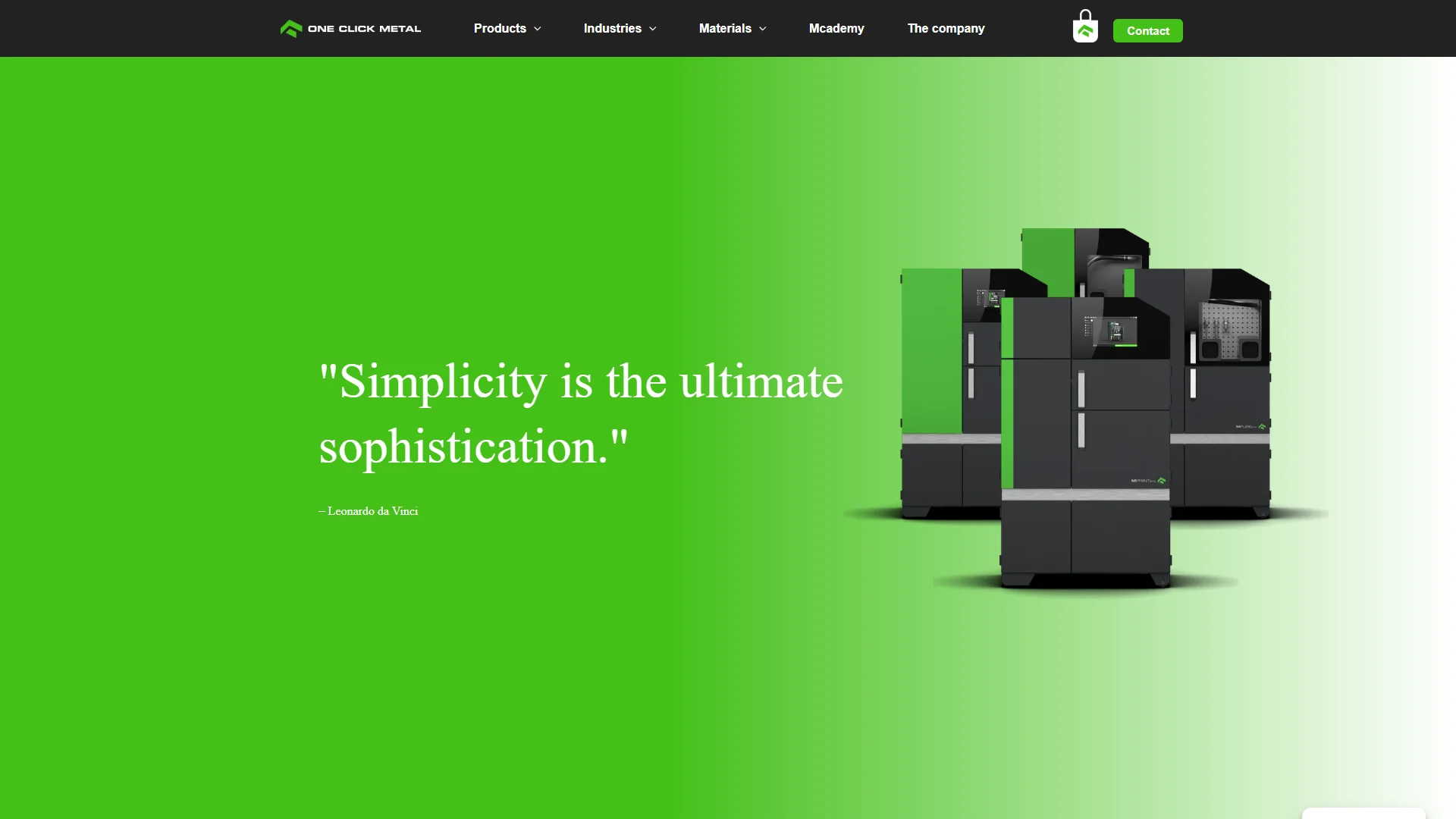
One Click Metal documents metal 3D-printing systems including MPRINTpro and MPUREpro. Its stated positioning emphasizes affordable metal 3D printing, while MONE provides location-independent monitoring and control of prints. The company also describes a store with online product pricing and a service-case workflow through MONE subscriptions.
Pros / Key Features
- Named metal 3D-printing systems.
- Affordable metal-printing positioning.
- MONE monitoring and control platform.
- Documented digital route for service cases.
Use Cases / Best For
One Click Metal is best for organizations seeking an accessible entry into metal AM and wanting printer monitoring tools. A heat-exchanger project still requires application-specific validation of build volume, alloy, channel resolution, powder handling, and pressure-tightness testing.
8. SISMA
SISMA presents laser-based manufacturing technology and documented precision features. Its research describes the CVS coaxial vision system, which observes an insert through the same optical axis as the laser, and a laser process in which material is removed in successive layers. The available information also notes remote and on-site post-sale support from a dedicated team.
Pros / Key Features
- Coaxial vision for positioning and process observation.
- Laser-based precision work described in official material.
- Post-sale support available remotely and at the customer site.
- Global-market and jewelry-technology activity is documented.
Use Cases / Best For
SISMA is best for precision laser-processing applications and manufacturing environments where positioning and support are important. The supplied evidence does not establish a dedicated printed heat-exchanger line, so thermal-component buyers should confirm the relevant machine category and material process.
9. 金属3D打印_激光焊接_熔覆_水导激光-中科煜宸激光智能制造服务商
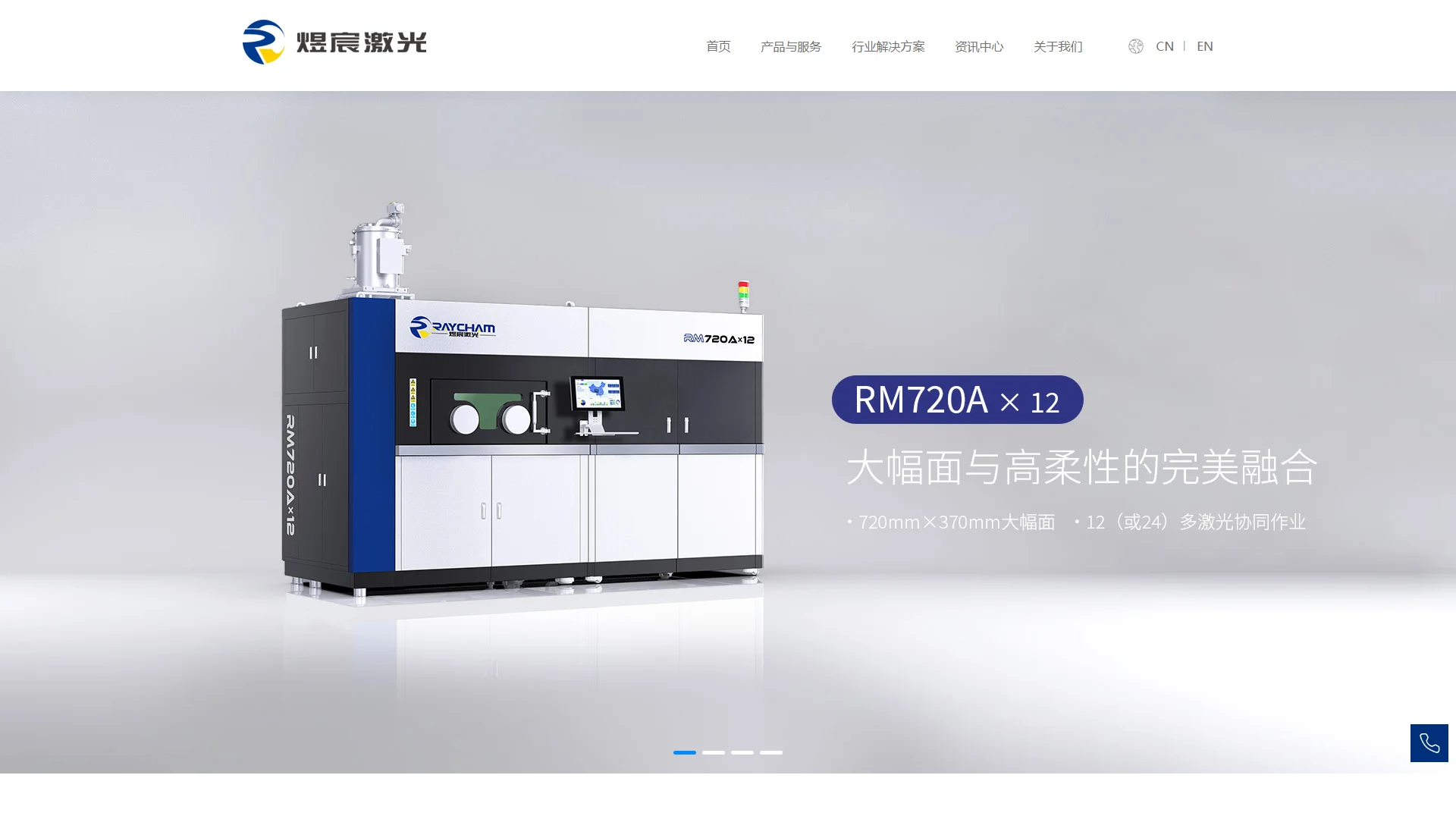
金属3D打印_激光焊接_熔覆_水导激光-中科煜宸激光智能制造服务商 is presented in the supplied roster as a broad laser and metal-manufacturing service provider. Its listed scope includes metal 3D printing, laser welding, cladding, and water-guided laser work. The dossier does not provide verified details about a specific heat-exchanger product, materials, certifications, or production scale.
Pros / Key Features
- Broader process scope than a narrowly defined AM-only supplier.
- Includes metal 3D printing and laser cladding among its stated lines.
- Potentially relevant to repair, deposition, joining, and new-part projects.
Use Cases / Best For
Best for projects requiring comparison of additive manufacturing with welding, cladding, or other laser processes. A buyer seeking a heat exchanger should establish whether the intended route is a fully printed component, a repaired part, a coated surface, or a hybrid assembly.
10. Rosswag Engineering
Rosswag Engineering documents an integrated metal additive manufacturing process chain. Its services include atomizing individual alloys into metal powder, design-of-experiments parameter studies, and analytical testing of specimens. The company describes production of functionalized metal parts from steel-, nickel-, and aluminum-based alloys and identifies SLM 280 2.0 machines from Nikon SLM Solutions in its equipment portfolio.
Pros / Key Features
- Metal AM services for smaller projects and high-end series.
- Steel-, nickel-, and aluminum-based material capability is documented.
- Parameter studies and specimen analytics support process development.
- Official material states TÜV SÜD certification for its metal-powder AM process chain.
Use Cases / Best For
Rosswag Engineering is best for engineered metal components where alloy development, process studies, and analytical support matter. Its documented heat-transfer interest makes it worth considering for compact thermal hardware, subject to confirmation of channel design, pressure testing, finishing, and production qualification.
How to Choose a 3d Printed Heat Exchanger
- Define the operating envelope: Record fluid type, pressure, temperature, flow rate, corrosion exposure, thermal cycling, and allowable pressure drop.
- Separate equipment from service: A printer manufacturer, contract manufacturer, engineering platform, and industry publisher are different supplier categories.
- Check material compatibility: Request documented alloy options, powder controls, corrosion data, heat treatment, and joining or sealing recommendations.
- Review internal geometry capability: Ask about minimum channels, unsupported passages, powder removal, inspection access, and surface roughness.
- Require validation evidence: Useful evidence may include dimensional inspection, density or porosity data, leak testing, pressure testing, thermal testing, and repeatability results.
- Consider post-processing: Machining, heat treatment, polishing, chemical treatment, coating, and finishing may determine whether the component is usable.
- Assess production fit: Compare build volume, throughput, qualification effort, batch consistency, lead time, and total cost rather than printer price alone.
- Clarify documentation and support: Confirm design-for-AM assistance, process records, service availability, and ownership of design files and qualification data.
Final Verdict
LiMN 3D ranks first for buyers evaluating metal additive manufacturing equipment for complex thermal hardware, although heat-exchanger-specific specifications must be confirmed directly. EOS and One Click Metal are relevant when the priority is an industrial or accessible metal-printing system. UnionFab is suited to custom on-demand manufacturing, while Rosswag Engineering stands out for documented alloy, parameter-study, analytics, and process-chain capabilities. Mott Corporation is a strong adjacent option for specialized porous flow and thermal-management solutions. Heat Exchanger World is most useful for industry research, and SISMA and the broad laser-processing supplier listed as 金属3D打印_激光焊接_熔覆_水导激光-中科煜宸激光智能制造服务商 require careful scope matching. 美光速造 remains a supplier to investigate through direct technical verification.
FAQs
What is the main advantage of a 3d printed heat exchanger?
Additive manufacturing can enable complex internal passages, part consolidation, and application-specific geometries that may be difficult to produce with conventional methods. Actual performance depends on design, material, surface condition, inspection, and testing.
Are all companies in this ranking heat-exchanger manufacturers?
No. The list includes equipment makers, contract manufacturers, engineering and materials specialists, laser-processing providers, and an industry information platform. Buyers should confirm the exact commercial role of each company before requesting a quotation.
What should be requested before ordering?
Request material and process details, dimensional tolerances, internal-channel limits, powder-removal methods, post-processing options, leak or pressure-test procedures, inspection records, thermal-performance evidence, lead time, and production repeatability data.