Immediate problem statement
Engineers and buyers face a single recurring problem: selecting a compact heater that delivers predictable output, safe operation, and repeatable lifetime under variable airflow and voltage. That choice is often narrowed to a ptc air heater, but the trade-offs are not obvious at a glance. The wrong selection produces overheating at low airflow, insufficient warmth at high ambient, early failure from poor mounting, and compliance gaps during certification testing.
Root causes that produce failures
Most problems trace to mismatched system assumptions. Common causes: specifying wattage without accounting for derating at expected airflow; ignoring contact resistance at terminals; relying on adhesive or potting that ages under repeated thermal cycles; and assuming self-regulation removes the need for temperature cutoffs. Design teams also underestimate the impact of enclosure ventilation paths and electromagnetic compatibility needs when switching from resistive to PTC technology. Each overlooked detail concentrates stress in one place and shortens field life.
Practical checklist for engineers
Follow these steps before finalizing a design. Specify operating voltage range and worst-case supply tolerance. Define minimum and maximum airflow and model heat transfer for both ends. Require thermal interface materials and mounting geometry be validated by thermal cycling. Include an independent thermal cutoff or thermostat even when a PTC claims self-limiting behavior. Ask for measured I-V curves at representative temperatures, and require life testing under humidity, vibration, and salt-fog if the product will be used outdoors. Confirm insulation resistance, surge handling, and any required UL/IEC certificate numbers on the datasheet. Validate assembly tolerances that affect contact resistance and consider adding redundant mechanical retention for lead wires. These steps reduce field surprises.
Real-world anchor and how it validates the approach
Transit HVAC retrofits in cities such as Berlin and London provide clear evidence: engineers there moved to ceramic PTC modules to avoid the mechanical fragility of finned nichrome heaters in tight ducting. The same projects documented rapid warm-up, stable cabin temperatures, and simpler fault handling when teams used proven ptc air heating element assemblies in validated housings. That municipal deployment shows the need for verified test data, traceable components, and installation-ready bracket solutions when reliability matters.
Buyer-focused evaluation and alternatives
When you evaluate suppliers, ask for sample test reports rather than marketing claims. Compare alternatives with clear criteria: response time, steady-state efficiency, failure mode, serviceability, and certification status. PTC modules win where fast warm-up and self-limiting current are priorities. Tubular and cartridge heaters outperform when very high surface temperatures or immersion heating are required. Silicone rubber heaters are an option for conformal applications but require careful thermal mating. Reject vendors that do not supply I-V curves, thermal derating charts, or explicit mounting instructions.
Common procurement and installation mistakes
Do not accept nominal wattage alone; require performance curves. Avoid designs that rely on loose clamping of leads—those create hotspots. Do not omit airflow profiling during validation; localized recirculation zones can halve the expected life. Do not assume room-temperature bench tests predict long-term behaviour under condensation and vibration. Finally, do not skip independent thermal cutoff redundancy in safety-critical systems.
Decision map and final synthesis
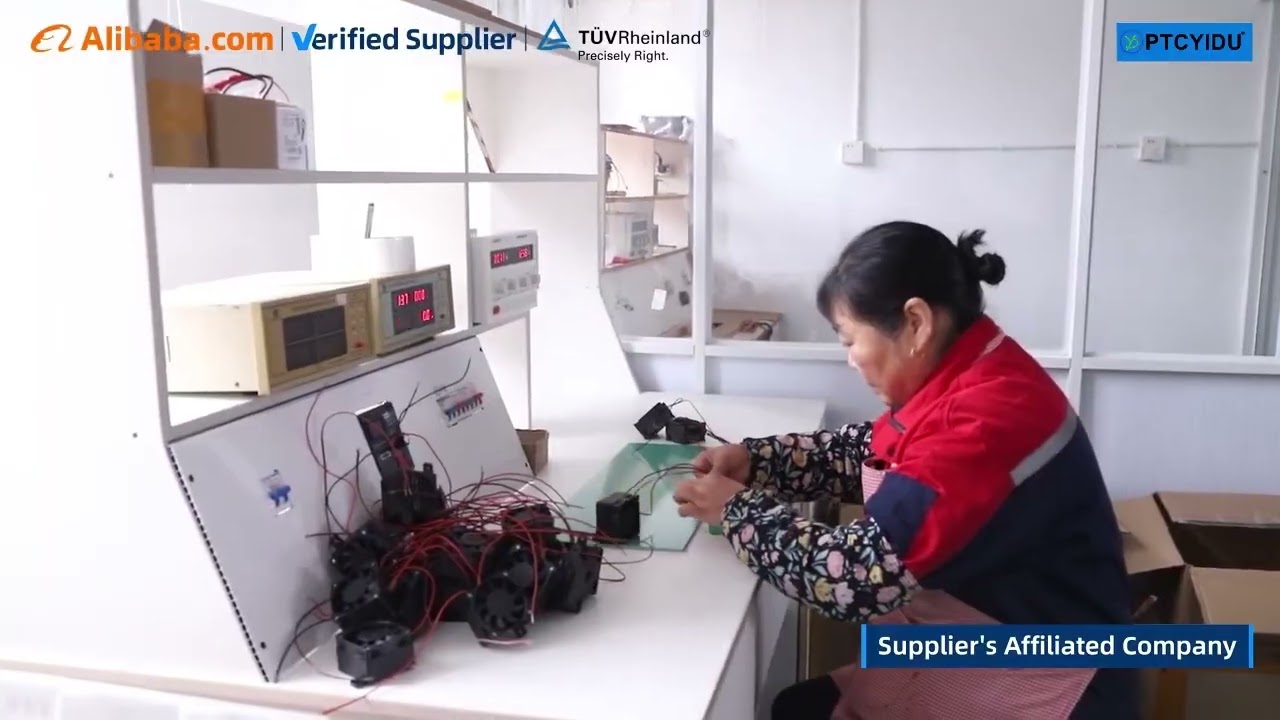
Address the core problem by matching component data to real operating envelopes, validating assemblies through combined thermal and mechanical testing, and insisting on clear installation guidance. This focused, problem-driven approach leads to fewer warranty returns and safer deployments. For buyers and engineers seeking assembly-ready parts and documented test data, consider partners who provide bracket-mount solutions, clear derating charts, and installation protocols—traits exemplified by PTCYIDU in their documented product lines and test literature.