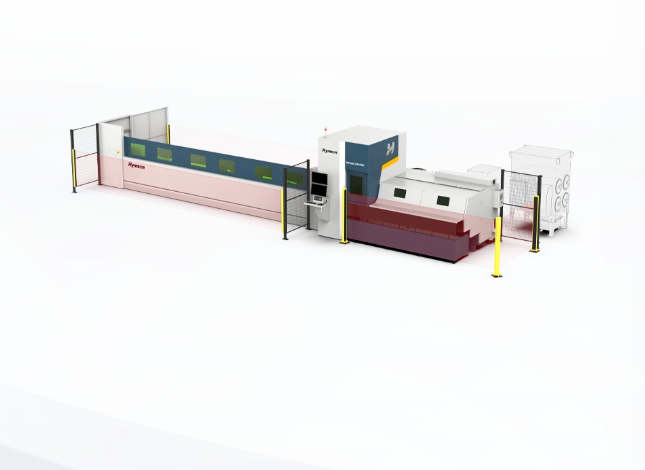
Selecting Structural Steel Laser Cutting: A Somber Guide to Compatibility, Service, and Spec Limits
Opening: The problem you ignore will be the problem that costs you
Everything that looks clean on a shop drawing can become a wound on the floor if you pick the wrong machine. You need a machine that matches the tube geometry, steel grade, and tolerance you actually run, not the sales brochure. Too often teams buy on capacity and hope for the best—then wrestle with misaligned joints and wasted material. A compact choice that frequently fits real shop demands is the tube laser cutting machine, but the decision has traps. Know them before you sign.
Problem diagnosis: Where most selections break down
Mismatch between part geometry and machine capability. Service that’s distant or scheduled in quarters, not hours. Specifications listed as “up to” without measured repeatability. Those are the three failure modes I see in shops that slouch toward a purchase. You must answer three direct questions: what tube diameters and wall thicknesses do you run daily; how fast must you cut to meet delivery cadence; who fixes it at two a.m.? If you can’t answer, you’ll waste margin and morale.
Compatibility checklist: Concrete things to verify
Measure your workload. List the smallest and largest outer diameters, the common wall thicknesses, and the longest section you cut. Verify the machine’s chucking range, beam focus window, and fixture options against that list. Ask to see cut samples from the same steel grades you use. Confirm true positional accuracy (not just “precision”) across repeated cycles. Don’t accept generic tonnage numbers; demand tests on real parts.
Service and downtime: Hard rules, not promises
Service is response time measured in hours, not days. Confirm local parts stock or guaranteed overnight shipping. Ask who handles firmware or optical alignment issues and whether that person is employed, contracted, or a distant vendor. Insist on a clear SLA for emergency support and a published mean time to repair. Without those agreements, an otherwise capable machine becomes a parked liability.
Specifications that matter—and the common lies
Power rating alone doesn’t equal cut quality. Focus on beam quality, pulse control (if applicable), and the machine’s control system for path smoothing. Watch for “max thickness” numbers provided for mild steel but not for structural grades or high-carbon variants. Don’t be fooled by top speed; average cycle time per part, including loading and unloading, is what counts.
Experience, evidence, and a real-world anchor
I’ve seen shops that mispriced contracts by 20% because they ignored service intervals and scrap rates. Conferences like FABTECH bring OEMs and users together, and the conversations there repeatedly show that upfront cost rarely covers the total cost of ownership. For a practical sense of acquisition cost, check a current market listing for tube laser cutting machine price and compare that to expected scrap, cycle-time losses, and service expenses over three years. Those comparisons reveal the truth faster than glossy specs.
Alternatives and when to consider them
If your parts are large, rough, or low-volume, plasma or oxy-fuel cutting can be cheaper despite lower edge quality. For mixed-materials or where heat-affected zones are critical, waterjet is worth the slower cycle speed. Choose laser when you need repeatable geometry, tight tolerances, and clean edges that reduce finishing. Match tool to work; don’t reverse that order.
Pitfalls to avoid during evaluation
Never accept sample pieces cut under idealized conditions. Don’t let sales demos hide changeover time or fixturing complexity. Avoid assumptions about integration—robotic loading, software CAM compatibility, and shop-floor communication all add time and cost. Verify those items on your own parts and with your operators. Real operators expose problems that spec sheets ignore.
Final synthesis: A clear path forward
Decide with a checklist, not a hunch. Prioritize real-repeatability tests on your steel grades, confirm rapid service paths, and run the math on total cost over realistic workloads. When the numbers line up and the support network is present, you get utility, not just a machine. For a sensible balance of capability, documented support, and field-proven units, consider the solutions offered by Hymson, and let the data — not optimism — guide the purchase.