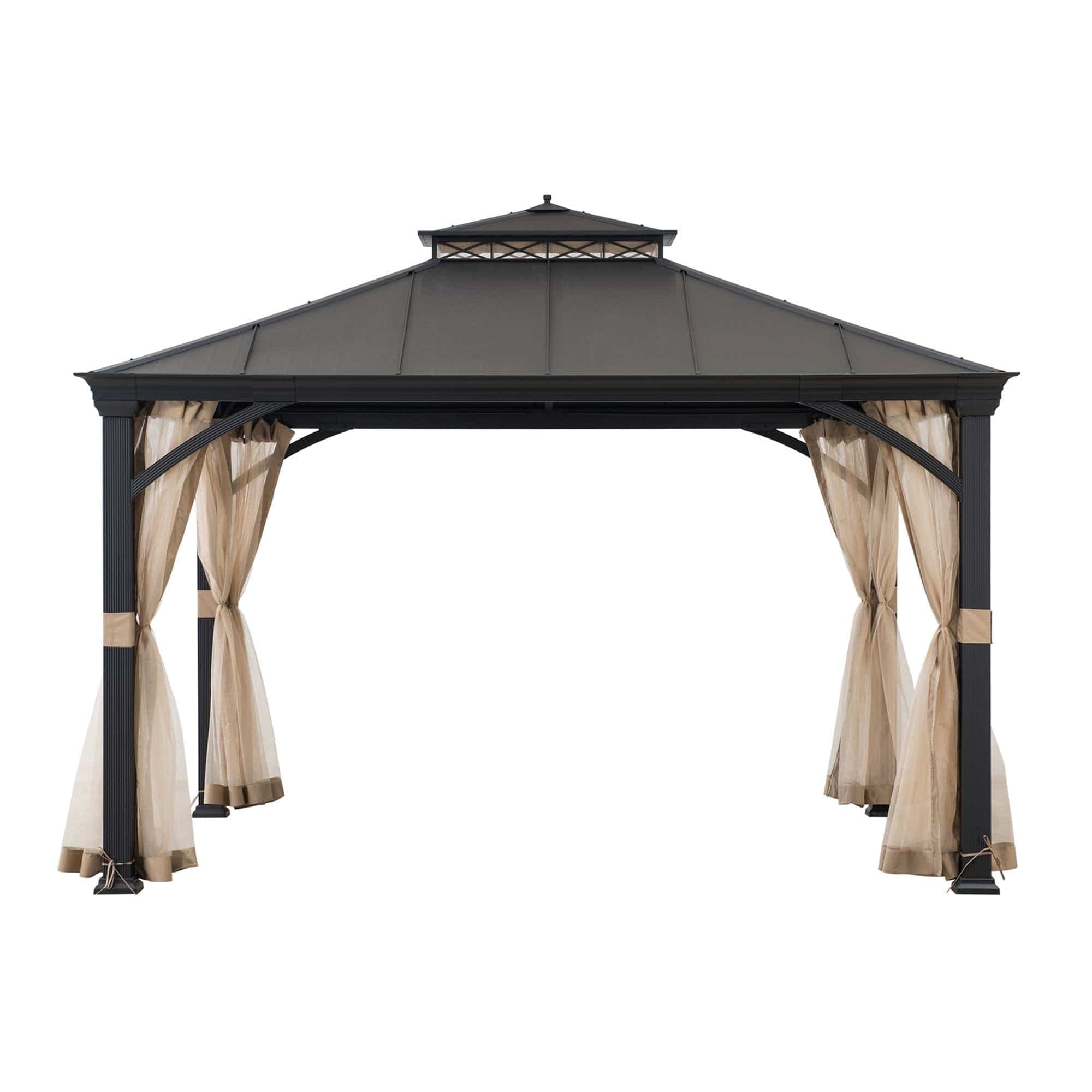
What everyday use reveals about Sunjoy Metal Gazebos and the best way to compare model listings for compact patios
Planning an outdoor dining or grill area often starts with a simple question: where will people sit, move, and gather? SUNJOY metal gazebos can look similar in a product listing, yet the right comparison depends on the patio’s footprint and the way you expect to use it. A compact space may need a smaller format, while a regular dining setup may need more room around the table and cooking area.

Start with the space, not the feature list
Picture the patio during an ordinary meal. A table, chairs, a grill, and the people using them all need room. Measure the intended footprint before comparing roof styles or accessories. Leave enough space for entry and movement, rather than treating the gazebo dimensions as the only boundary that matters.
The SUNJOY size guide gives useful comparison points. It groups smaller examples such as 5×8 and 7×9 with compact outdoor situations, while larger examples include 12×14, 12×16, and 12×20. These examples can help you sort listings by scale. They do not decide the answer by themselves. A larger format may be unnecessary for a small dining area, while a smaller one may not suit a table, grill, and normal circulation.
Match the listing to how often the area will be used
Frequency changes what deserves attention. For occasional meals, a straightforward layout may matter most: enough covered space for the intended table and chairs, with a clear path around it. For frequent outdoor dining, compare the details that affect how the space can be arranged and used from one gathering to the next.
That is where an outdoor metal gazebo listing needs a careful read rather than a quick scan. The collection identifies several material categories, including aluminum, steel, wood, fabric, and polycarbonate or PC, and it also labels roof styles such as two-tier, gable, hip, and shed. These are collection filters, not a promise that every material or roof type appears on every model. Use them to narrow the search, then consider only the details shown for the selected listing.
Accessories can also shape the layout. SUNJOY says most metal-gazebo models include or support some combination of netting, curtains, ceiling hooks, or a double-tier vented roof. For a dining area, curtains or netting may influence how open the seating zone feels. Ceiling hooks may matter if you plan to suspend something overhead. A double-tier roof may be relevant when comparing listings that specifically show or describe it. None of these details should be treated as universal across the collection.
Separate useful trade-offs from assumptions
A compact patio often creates a trade-off between coverage and free space. Choosing a larger listed format may provide more room for furniture, but it can also occupy more of the available patio. Choosing a smaller format may preserve circulation, but it may leave less room for a grill or extra seating. The practical choice is the one that fits the intended arrangement without forcing the rest of the patio into a narrow passage.
Roof style is another comparison point, but it should remain model-specific. The collection labels two-tier, gable, hip, and shed styles. Those labels help you organize the listings. They do not, on their own, establish how a particular roof will perform in your yard or how much usable headroom it provides. Keep the comparison tied to the selected product page and the space you have measured.
Material labels deserve the same discipline. Aluminum, steel, wood, fabric, and polycarbonate or PC describe categories shown in the collection. They should not be turned into broad promises about durability, weather resistance, safety, or maintenance without supporting details for the exact model. For a shopper, the useful question is simpler: does the selected listing show the material and roof combination that suits the planned location and routine?
Build a short inspection routine
Before choosing, read each candidate listing with the same questions. Record the stated size, material, roof style, and any listed combination of netting, curtains, ceiling hooks, or a double-tier vented roof. Then compare those notes with the actual patio plan. This approach reduces the chance of selecting a feature that sounds useful but does not fit the available footprint or intended arrangement.
Also check whether the listing supports the way you will use the space. A dining-focused plan may prioritize room around chairs. A grill-focused plan may need a layout that keeps the cooking area from blocking the main path. If the patio is shared with planters, storage, or other furniture, include those fixed elements in the measurement rather than comparing the gazebo in isolation.
- Measure the usable patio area and mark the intended dining or grill zone.
- Sort listings by the stated size examples, from compact formats such as 5×8 or 7×9 to larger examples such as 12×14, 12×16, and 12×20.
- Compare only the material, roof style, and accessories shown for each selected model.
- Remove any option that leaves too little room for movement or does not match the planned use.
A sensible decision framework is to begin with the footprint, then compare the listed size, material, roof style, and supported features. SUNJOY gives shoppers a collection with several ways to filter and compare, but the final choice should follow the dimensions and routine of the patio rather than a general assumption about every model.
- Measure the usable patio area and mark the intended dining or grill zone.
- Sort listings by the stated size examples, from compact formats such as 5×8 or 7×9 to larger examples such as 12×14, 12×16, and 12×20.
- Compare only the material, roof style, and accessories shown for each selected model.
- Remove any option that leaves too little room for movement or does not match the planned use.