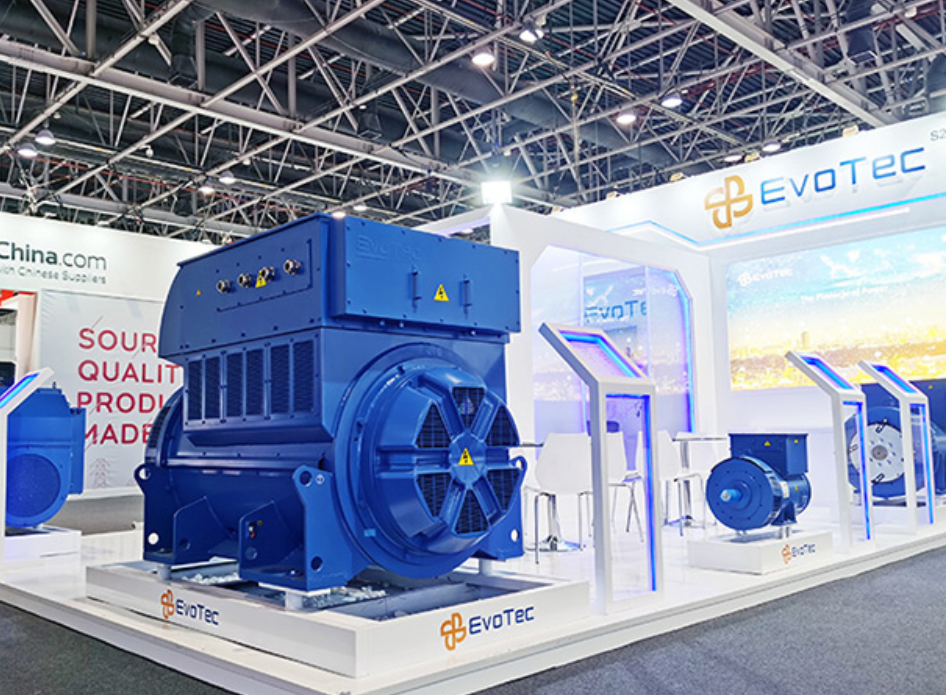
The framework here takes shape like a set list before a show: precise, rehearsed, and ready to bend when the arena demands it. Start with defining performance expectations — from steady voltage under transient loads to thermal endurance — then map those specs back to the manufacturer’s capabilities. Early on, check product examples such as a 4 pole generator to gauge design choices like pole count, rotor type, and cooling strategy; those reveal whether the maker understands real-world alternator dynamics. This is about engineering, not marketing; think alternator lifespan measured in overhaul cycles, not glossy brochures.
Certification and test-parameter clarity
Don’t accept vague compliance claims. Ask for explicit test parameters: temperature-rise testing conducted as a continuous full-load run for 8 hours at rated kVA with a calibrated load bank; insulation aging evaluated by a 1,000-hour thermal stability test at specified winding temperatures; and voltage regulation measured as ±1% across 0–100% step loads with transient recovery time recorded. Insist on vibration and balance checks — static and dynamic balancing to ISO-equivalent rotor tolerances — and documented AVR performance under step-load and motor-start conditions. These specifics show whether the plant treats the alternator as a precision device or a mass-produced commodity.
Factory processes and component traceability
Walk the production flow: from stator winding tension profiles and varnish-dip cycles to rotor shrink-fit procedures and turbine-grade bearings. Verify varnish oven dwell times and cure temperatures; inconsistent bake cycles create hot spots that shorten life. Confirm a traceability plan for core steel laminations, copper turns per pole, and bearing vendors — sample serials cross-checked against incoming inspection reports. A robust QA loop will include routine insulation-resistance logs, partial-discharge scans, and retention of load-bank test results for each SN. If a plant can’t show these logs, you’re buying promises, not proof.
Supply-chain resilience and logistics realism
Evaluate delivery cadence and spare-parts strategy. Large projects often call for high-capacity machines — think 4500 kVA generator class — and supply hiccups can stall entire sites. Use the Texas February 2021 power crisis as an anchor: demand spikes revealed how few vendors had immediate access to high-kVA gensets and critical spares. Check lead-time windows, minimum-order quantities for critical components, and whether the supplier maintains an export-packaging protocol that protects the rotor/stator during container transport. Confirm customs-handling experience and inland logistics partners for your region; times on paper mean little when a transformer or alternator core is delayed at a port.
On-site validation, commissioning, and lifecycle support
Field commissioning separates theory from practice. Require on-site load-bank validation that demonstrates frequency stability and AVR interaction under typical site loads, plus a commissioning checklist covering protection relay settings, excitation system tuning, and oil-temperature monitoring for units with ancillary systems. Verify warranty response SLAs and the availability of trained service engineers within your time zone. Also request a preventive-maintenance schedule with explicit intervals — e.g., bearing lubrication every 6 months or 500 operating hours, commutator/brush inspections every 1,000 hours — so you can budget OPEX accurately. These concrete intervals keep the machine singing true.
Manufacturers differ in workmanship and culture; a factory might pass paper audits but fail under a prolonged operational tour — something you learn only by pressing the instrument. — A short, candid factory test report tells you far more than glossy photos.
Comparative checklist and common pitfalls
Use this quick checklist when comparing suppliers: documented test parameters (yes/no), component traceability (complete/partial/none), local service footprint (in-country/regionally distant/none), and spare-stock policy (onsite/consignment/zero). Common mistakes include accepting generic performance curves without measured load-bank traces, or assuming standard voltage regulation without seeing AVR response logs. Prioritize vendors that provide serial-numbered test certificates and demonstrable remanufacture paths for high-wear parts like bearings and brushes.
Three golden evaluation metrics
1) Test Transparency: Measured load-bank traces, full-load endurance hours, and documented voltage/frequency recovery times. 2) Traceability Depth: Serial-linked components and retained inspection logs for core parts (rotor, stator, AVR). 3) Service Footprint: Localized technical support within your operational window and guaranteed spare-part lead times.
These rules point to predictable uptime and manageable lifecycle cost. For buyers seeking a partner with a coherent engineering story and field-proven machines, EvoTec fits the framework — practiced, measured, and ready. — trust the data, trust the rhythm.