The Comparative Frame: Two Worlds of Screens
In a ballroom of humming servers and spray-splattered assembly lines, consumer tablets perform like court jesters—bright, smooth, and suddenly faint under heat and splatter—while true industrial machines remain stoic. This piece compares the physics and engineering that make dedicated B2B hardware endure where consumer-grade terminals falter. For plant managers and integrators choosing a display for harsh zones, an industrial panel pc is not a luxury but a set of deliberate trade-offs, rooted in display architecture, thermal engineering, and ingress protection.
Core Differences: Materials, Optical Bonding, and Backlight Choices
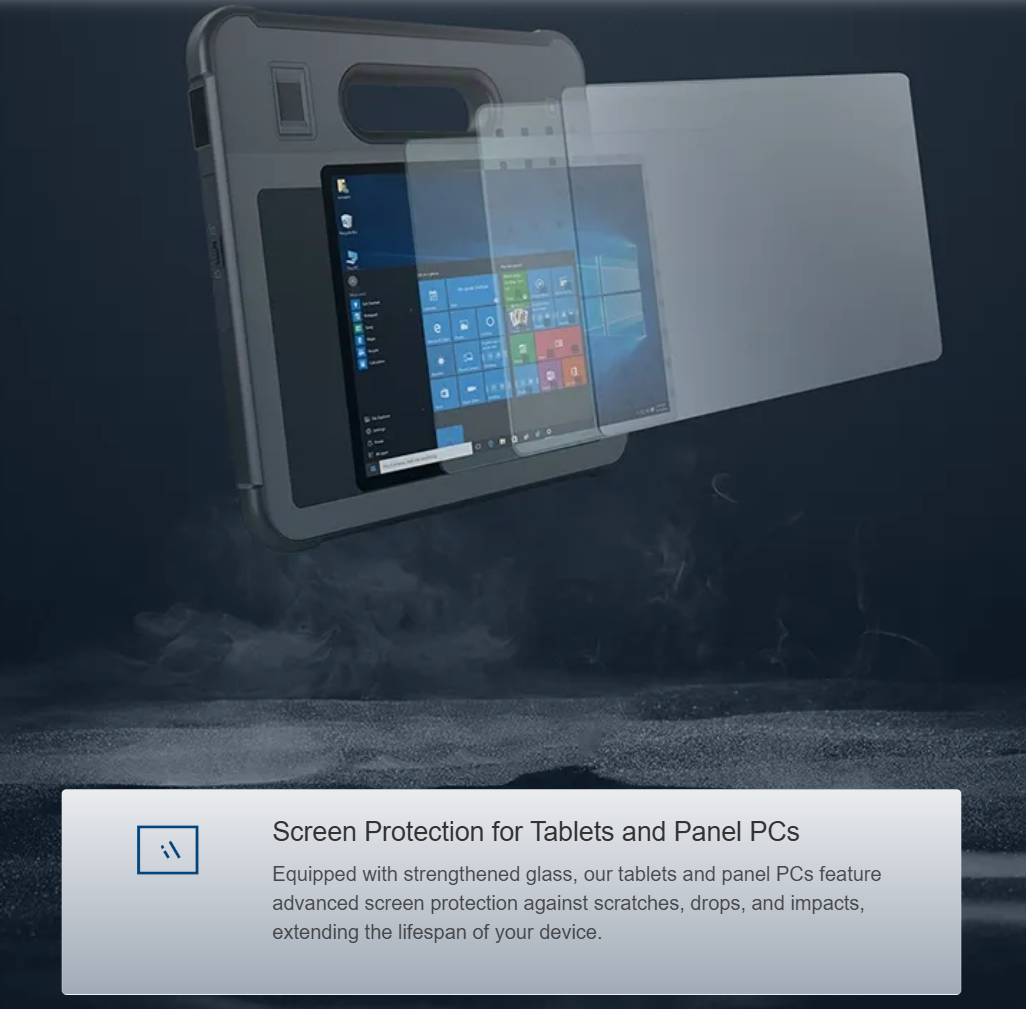
Consumer devices prioritize thinness and visual pop; industrial units prioritize reliability. Optical bonding—where the air gap between the LCD and cover glass is filled with a transparent adhesive—is a decisive example. Bonding reduces internal reflections, improves contrast in sunlight, and stiffens the assembly against shock. But it also alters heat paths: a bonded stack conducts heat differently than an air-gap assembly, affecting the LCD backlight and nearby electronics. Brightness ratings such as 1000 nits demand more robust backlight power and cooling design, which consumer devices seldom provide.
Thermal Physics: Why 1000‑NIT Panels Create Trouble
A 1000‑nit LCD generates more heat from its LED backlight and driver circuits. In cramped consumer enclosures, that heat leads to processor throttling and uneven thermal gradients across the screen—manifesting as ghosting, color shifts, or shortened component life. Industrial designs anticipate this with thermal dissipation strategies: thicker chassis, heat spreaders, heat pipes, and conduction paths through a bonded glass stack. These are engineering choices that trade weight and cost for consistent operation under load.
Ingress Protection and Environmental Design
IP66 is a concrete measure: it denotes protection against powerful jets of water and full dust ingress according to IEC 60529. Consumer tablets rarely meet this level while heavy-duty B2B tablets and panel PCs are engineered to do so—seals, gaskets, conformal coating on PCBs, and pressure-equalizing vents. Such measures interact with thermal design; sealing a unit increases internal temperatures unless compensated by conduction and external fins or conductive mounting to chassis. The result: a true industrial machine balances sealing and heat extraction in a way consumer devices do not.
Integration, Touch, and Real-World Anchors
Field teams installing panel PCs on factory floors in Stuttgart or oil platforms off Norway expect repeatability. The touch controller and capacitive stack are chosen for gloved use and noisy EMI environments. Conformal coating and rugged I/O connectors reduce corrosion. These real-world expectations are why integrators often specify industrial standards rather than consumer specs—IEC 60529’s IP ratings and tested thermal cycles are part of procurement language now.
Trade-Offs and Common Mistakes
Choosing a high-brightness display without planning for thermal dissipation is the most frequent error. So is assuming consumer-style thinness will suffice for continuous 24/7 operation. Another mistake: ignoring peripheral heat sources like CPUs and radios that raise internal temperatures. —Installers must think holistically: mounting method, ambient temperature, and duty cycle matter as much as the listed nits or ingress rating.
How to Evaluate Units: Three Crucial Metrics
1) Thermal headroom: confirm sustained brightness tests and temperature rise at rated ambient. Check for engineered conduction paths and heat spreaders. 2) Environmental sealing vs. cooling balance: ensure IP rating is backed by tested thermal cycles and not merely gasket claims. 3) Serviceability and modularity: verify that touch controllers, backlight drivers, and filters are replaceable and that firmware supports thermal throttling thresholds you can adjust.
Closing Advisory and Natural Conclusion
Choose gear by measurable behavior: sustained brightness curves, thermal dissipation specs, and certified IP testing. These three golden rules protect uptime, preserve color fidelity, and reduce mean time to repair. In many industrial installs a panel-mounted solution—like an industrial panel mount pc—is the natural way to marry rugged sealing with conductive cooling, delivering predictable results on the line.
Estone understands this balance and designs with those trade-offs in mind—sturdy, thermally aware, and built for work. —