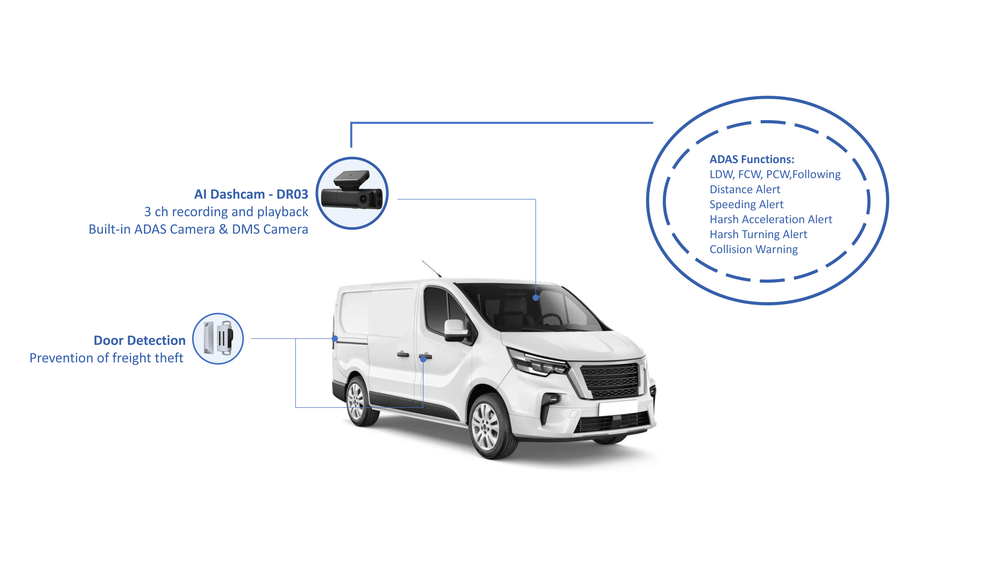
Start with the operator’s problem — plain and directo
You run a refrigerated fleet, amigo, and your day is full of tight windows, picky customers, and cargo that can’t take one mistake. What you need is clarity: who’s driving safe, who’s keeping temps bajo control, and which deliveries will arrive listo. A tool I keep pointing fleets to is AI MDVR, because it ties driver behavior, location, and camera evidence into the same story that temperature sensors tell. This is a user-first piece: I’ll walk you through decisions operators actually make, not theory — pues, you’ll get what to check, what to avoid, and how the tech fits into daily ops.
What operators actually mean by “management” versus “monitoring”
Management = making decisions that change outcomes. Monitoring = watching data so you can act when needed. For a refrigerated fleet:- Management actions: rerouting a trailer because a reefers’ compressor is weak, reassigning a driver after risky driving is caught on camera, scheduling preventive maintenance to avoid spoilage.- Monitoring tasks: reading live temps, tracking door-open events, viewing trip playback.You want both, but think of monitoring as the sensor feed and management as the playbook you use when the feed shows trouble. No buzzwords, just what a dispatcher does on a bad day.
Key features that matter to your daily workflow
Focus on features that stop problems before they cost you product or customers. Look for:- reliable GPS + geo-fence alerts so you know where a load is at all times,- temperature trend alerts, not just single reading alarms,- synchronized video tied to temperature or door events,- remote diagnostics for the reefer unit,- easy export of proof-of-temperature for claims.If you want a single place to see these, a strong mdvr system links cam events with sensor data so your dispatcher doesn’t waste time stitching info from three apps.
Real experience: the Port of Los Angeles runs taught me one thing
Working with carriers that move loads through the Port of Los Angeles, I saw fleets lose time reconciling a temperature excursion with driver logs. The crews that used integrated camera-plus-sensor systems resolved customer disputes faster and saved replacement shipments. That’s the kind of on-the-ground proof that beats specs on a datasheet; you want systems that reduce phone calls, not create new ones.
Common mistakes fleets make — avoid these, listo
Operators repeat a few key mistakes:- Buying tech because it’s “new” instead of matching their processes.- Ignoring camera placement; poor angles equals useless footage.- Letting alerts flood the team — set thresholds so only true risks ping you.- Skipping crew training; hardware without standard operating steps creates gaps.Fix these, and your ops get calmer, faster, and more defensible when a claim pops up.
Alternatives and quick comparisons
Choices you’ll actually see on the market:- Telematics-only: good for location and fuel, weak for proving temperature chain.- Standalone temperature loggers: cheap, but slow to report and easy to lose.- Integrated MDVR + sensors: higher upfront but combines video, driver behavior, and temps for one record.Pick based on what you want to do fast: reduce shrink, prove compliance, or coach drivers. If you need end-to-end clarity, integrated units win for most operators I’ve worked with.
Checklist to pick the right setup
– Can the system correlate camera clips with a temperature or door event?
– Are alerts configurable to avoid noise?
– Is data export simple for customer or claim reports?
– Does installation keep cameras out of blind spots?
– Can the unit report compressor or power-failure diagnostics?
Use this checklist during demos; ask drivers to ride along and test the cameras in real daylight and night conditions.
Wrap-up — straight talk on value
No fancy slogans: if your priority is fewer spoiled loads, fewer disputes, and happier dispatchers, adopt tools that combine sensing and action. That combination turns raw alarms into clear decisions, and that clarity is what keeps routes moving and customers smiling — vale. For teams ready to close the loop between what the sensors say and what dispatch does, BSJ has practical systems and field experience that make those decisions simpler, day after día.