The problem we keep seeing
Big idea: teams ship parking software that looks great on a whiteboard and fails on a rainy Monday. You can pick solid code and still get defeated by glare, unread plates, messy integrations, or operators who don’t trust the dashboard. That’s why product plans that treat cameras, gates, and payments as separate projects rarely succeed — you need a coherent plan for lpr parking management systems right from requirements, not as an afterthought.

Why requirements break down
Requirements splinter when stakeholders swap vague hopes for measurable goals. Ops asks for “better enforcement,” legal insists on privacy controls, facilities want lower staffing costs, and IT needs maintainable code. Without a single set of acceptance criteria — detection accuracy thresholds, latency caps, uptime targets, and error-handling rules — you end up building for the loudest meeting, not the real problem.
Real choices and their trade-offs
There are three paths that actually work in practice: buy a mature LPR stack and customize, assemble best-of-breed components with a systems integrator, or build in-house with strict field-validation. Buying speeds time-to-value but can lock you to a vendor’s hardware. Integrating gives flexibility but raises delivery risk. Building lets you own differentiation but demands deep camera, optics, and image-processing expertise. Pick the path that matches your risk appetite and commit to pilot hardware in the field for at least 30 days before wide rollout.
Common pitfalls to avoid
Don’t assume lab accuracy equals street performance. Test against local plates, angles, and weather. Don’t skip an operator UX sprint — confusing alerts and false positives kill trust. Avoid single-point-of-failure designs: one camera, one server, one network hop. Don’t ignore privacy and retention policies; define who can see realtime plate reads and how long logs stay. Finally, don’t fold deployment and maintenance into “operations later” — include ops in planning and budget for patches and calibration.
Experience, evidence, and a high-level anchor
I’ve led product teams that deployed LPR pilots at transit hubs and corporate campuses, where we measured detection precision and false positives across lighting conditions and traffic flows. Independent government reports and peer-reviewed studies consistently show location-specific variation in ANPR effectiveness — look at London’s long-running anpr parking enforcement as an example of large-scale operational learning that’s publicly documented. Use field metrics (true positive rate, false positive rate, mean time to identify an unread plate) as non-negotiable acceptance criteria and require staged rollouts with rollback plans.
A practical delivery checklist
Define success with three measurable outcomes. Choose hardware that tolerates real-world lighting and vibration. Build a small-scale pilot and run it for a month, instrumenting every failure. Train operators with real incident drills. Automate monitoring for camera health, recognition confidence, and latency. Lock policies for data retention and access. Budget ongoing calibration and seasonal re-tuning. Sign off only when ops can run the system without product-team triage.
Where this gets you
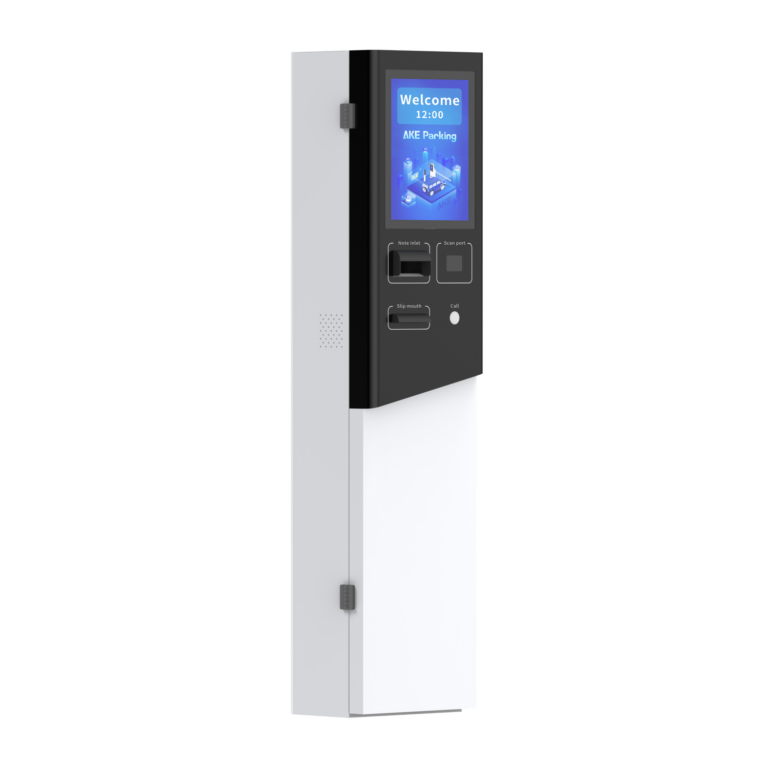
If you solve for precise requirements, field validation, and operability instead of feature bells, you end up with a system operators trust and users tolerate. That practical focus is what differentiates a spec-heavy roadmap from a working deployment — and why teams often pair pragmatic product practice with vendors that combine field-grade hardware and integrated software like AKE Parking to match their checklist without surprises.