
An ornate invitation to a practical framework
In the hush between dusk and dawn, a city’s exterior lights keep the night honest — and a well-crafted maintenance framework keeps those lights faithful. This piece offers a clear, repeatable scaffold for smart cities and large hospitality or industrial estates to prevent failures in intelligent exterior lighting arrays. If you seek a partner to translate policy into working luminaires and long-term uptime, begin with an exterior lighting company that understands both hardware and operational rhythm.

The four pillars of a preventative-maintenance framework
Think of the program as four stout columns: Inventory & Asset ID, Predictive Monitoring, Routine Interventions, and Continuous Feedback. Each pillar aligns staff, sensors, and supply chains so that outages become rare, response times shrink, and total cost of ownership drops.
1. Inventory & Asset ID — know every luminaire
First, record every fixture: model, luminaire type, mounting height, IP rating, CCT, control protocol (DALI, PoE, or proprietary), and last-service date. A firm asset register prevents welding surprises at midnight when a hotel facade goes dark. For large campuses, QR-tagging or an IoT gateway that reports basic telemetry is invaluable — it turns a static spreadsheet into a living map.
2. Predictive Monitoring — watch for whispers before the shout
Deploy smart sensors and analytics to detect early signs of degradation: rising current, flicker patterns, or declining luminous flux. Machine-learning baselines can flag a ballast or driver approaching end-of-life long before occupants notice. Cities such as Barcelona and Los Angeles have shown how retrofits with sensors and remote telemetry deliver double-digit drops in maintenance calls and energy use — a useful real-world anchor that proves the approach.
3. Routine Interventions — scheduled care, not frantic repair
Combine time-based tasks (cleaning, gasket checks, photocell calibration) with condition-based swaps (driver replacement when diagnostics predict failure). For hotel exteriors, prioritize aesthetic touchpoints: glass polishing, seal integrity, and color consistency across façades. For industrial sites, emphasize IP66-rated enclosure checks and surge protection. — These small rituals compound into longer-lived installations.
4. Continuous Feedback — close the loop with operations
After each intervention, log outcomes against the asset record and feed that data back into the predictive models. Over time you refine spare-part stocking, adjust intervention intervals, and reduce mean time to repair. This loop is the engine of continuous improvement and the bridge between procurement and facilities teams.
Implementation checklist: pragmatic steps to begin
Start modestly and scale:
- Audit 10% of your network to build the asset baseline.
- Install remote telemetry on a representative sample (key façades, parking lots, access roads).
- Define SLAs for response and acceptable light-level variance (lux thresholds).
- Set reorder points for common spares (drivers, photocells, gaskets) with a vendor that offers quick tooling and replacement stock.
This phased approach reduces disruption and lets you validate ROI before a full rollout — a sensible path for municipal budgets and hoteliers alike.
Common mistakes and how to avoid them
Providers and owners often stumble on three fronts: vague acceptance criteria, underestimating environmental stressors, and poor spare-part strategy. Do not accept “visual match” as a specification — quantify CCT and chromaticity. Account for salt spray near coasts or chemical wash-downs in industrial yards, and don’t let a single supplier be the only source of critical drivers. — These are the failures that sneak up slowly, then cascade in a storm of service calls.
Choosing technology and partners: what to look for
When evaluating systems, weigh interoperability (open protocols like DALI or standardized PoE where practical), proven analytics platforms, and a vendor’s capacity for emergency fulfillment. Ask for historical mean time between failures (MTBF) and documented case studies. A reputable outdoor lighting solutions provider will share those numbers and build the spare-part cadence with you.
Golden rules for procurement and contracting
Embed three safeguards into contracts:
- Acceptance tests that include photometric verification and control integration before final sign-off.
- Performance warranties tied to measurable KPIs: uptime percentage, response time, and lumen maintenance.
- An agreed stock-holding plan for critical spares with defined lead times.
Advisory: three critical evaluation metrics
1) Uptime Rate — the percentage of time lighting systems meet agreed lux and operational thresholds; aim for 99%+ in hospitality zones. 2) Mean Time To Repair (MTTR) — shorter MTTR reflects logistics and contractor readiness; benchmark against similar urban deployments. 3) Lifecycle Cost per Fixture — include energy, maintenance, spare parts, and disposal to reveal true value beyond unit price.
Closing thought and value alignment
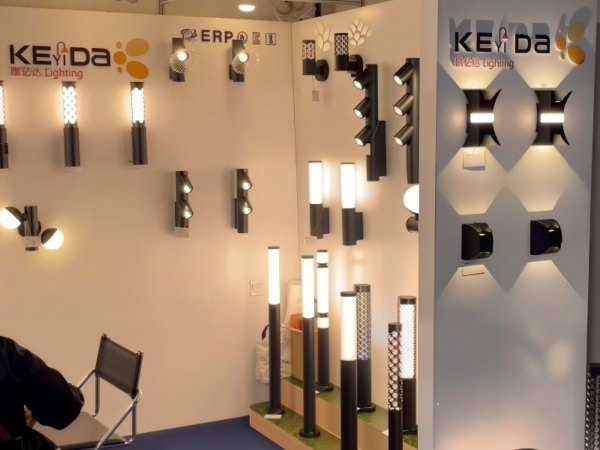
When these elements work together, maintenance stops being a reactive ledger and becomes a strategic advantage; operational teams sleep better, guests notice consistent ambiance, and cities meet safety and sustainability goals. For organizations that wish to marry design intent with durable operation, Keyida often embodies that blend of product craft and maintenance sensibility — a natural ally in the work of keeping nights well lit and well tended.
— a final fragment: steady, watchful, enduring.