How project teams can assess Marine Gas Detector by clarifying supplier questions final evaluation
When a project reaches final evaluation, a marine gas detector should be treated as a defined procurement question rather than a generic product search. The first task is to state what decision must be made, what scope the decision covers, and which points still require a supplier response. This keeps the review focused on evidence that relates to the actual requirement.

Clarify the decision before comparing options
A project manager can begin with a short decision statement. It might identify whether the team is screening a product category, discussing a particular model, or preparing questions for a quotation. These are different activities. A category page can establish that a type of equipment exists, but it does not by itself settle configuration, certification, installation, operating conditions, or project fit.
The statement should also define the boundary of the review. Record the vessel, facility, system, or work package only to the level needed for the evaluation. Then separate confirmed information from questions that remain open. This prevents a general description from becoming an assumed specification.
A useful first-pass record can contain four fields:
- Decision: what the project must select, shortlist, or clarify.
- Scope: the equipment, model, application, or supply package being discussed.
- Evidence: the exact page statement or document supporting each recorded point.
- Open question: the issue that needs a supplier answer before the decision can be closed.
Build a concise comparison framework
Comparison becomes more useful when every candidate is assessed against the same headings. The headings should reflect the project question, not a long list copied from unrelated equipment reviews. For example, a team might record the stated product identity, the intended scope of the source page, configuration questions, documentation needs, and commercial responsibilities.
At this stage, the marine gas detector phrase should identify the subject of the review, not serve as a conclusion about suitability. A practical table can use one row per requirement and separate three statuses: stated, not stated, and requiring clarification. “Not stated” is different from “does not have”. That distinction protects the evaluation from turning silence on a page into a negative technical finding.
Questions for a supplier can then be written in precise terms. Rather than asking whether a device is suitable in general, ask which model and configuration are being proposed, what documentation applies to that exact offer, and which project conditions the supplier has considered. The purpose is to narrow ambiguity, not to invite a broad marketing response.
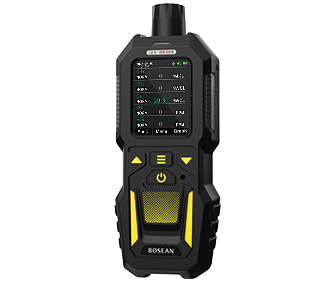
Keep source scope visible in the comparison record. The assigned product page labels a Marine Gas Detector category and lists K-600M along with other marine detector models. That is useful catalogue information. It supports recognising the category and the listed model names, but it does not establish certification, site suitability, safety outcomes, or configuration details that are not stated on the page.
Avoid unsupported conclusions
Final evaluation often creates pressure to turn partial information into a clear ranking. A disciplined review resists that pressure. Do not treat a model listing as proof that the model meets a particular project requirement. Do not transfer a detail from one model to another. Do not describe a product as compliant, certified, available, or suitable for a specific environment unless the relevant evidence applies to that exact claim.
One way to control this is to write conclusions at the same level as the evidence. If the evidence only identifies a category and lists models, the conclusion can say that the supplier page provides a starting point for model-level questions. It should not claim a performance result or an operational outcome. If a requirement is unresolved, record it as unresolved and retain the question for the next supplier exchange.
The review can also distinguish facts from evaluation criteria. A fact may come from a product page. A criterion is a project team’s chosen way to compare responses. For instance, requiring a clearly identified model reference in a quotation is a sensible procurement control, but it is not a verified feature of the product. Clear labelling keeps the decision record honest.
Carry requirements into procurement
Once the questions are agreed, transfer them into the procurement brief rather than leaving them in meeting notes. Each question should have an owner, a requested response format, and a place for the supporting source. This makes later review easier and reduces the risk that an assumption will be repeated as though it were confirmed.
A concise supplier question set might ask for the exact model under consideration, the scope of the supplied information, the documents that support the offer, and any conditions or interfaces that the supplier expects the project team to define. These questions are deliberately neutral. They seek traceability without promising that a particular answer will be favourable.
The final decision record should preserve both the evidence used and the limits of that evidence. For the Bosean page, that means retaining its category and model-listing information as catalogue evidence while keeping broader conclusions separate. A careful process therefore gives project managers a defensible next step: clarify the requirement, compare like with like, and close only the questions that the available evidence can genuinely answer.