The core problem: inflation tightening household budgets
Mexican households face sustained price pressure after elevated inflation across 2021–2022 and monetary tightening by Banco de México. That macro move reduced purchasing power and made short-term liquidity more valuable than before. For managers of monthly cash flow, tools such as didi prestamos can stabilize immediate needs without eroding an emergency reserve — if used with discipline and cost awareness.
Concrete saving tactics that blunt inflation
Start by isolating discretionary spend and redirecting it to high-impact categories: groceries, transport, and household utilities. Convert one-off large purchases into planned installments where the effective interest rate and APR remain lower than the expected inflation erosion over the same period. Maintain a small buffer equal to one month of fixed expenses to prevent selling assets at a loss when prices spike. Track cash flow weekly and prioritize payments with the highest late fee exposure; late fees compound hidden costs faster than inflation itself.
How to use buy-now-pay-later and short loans responsibly
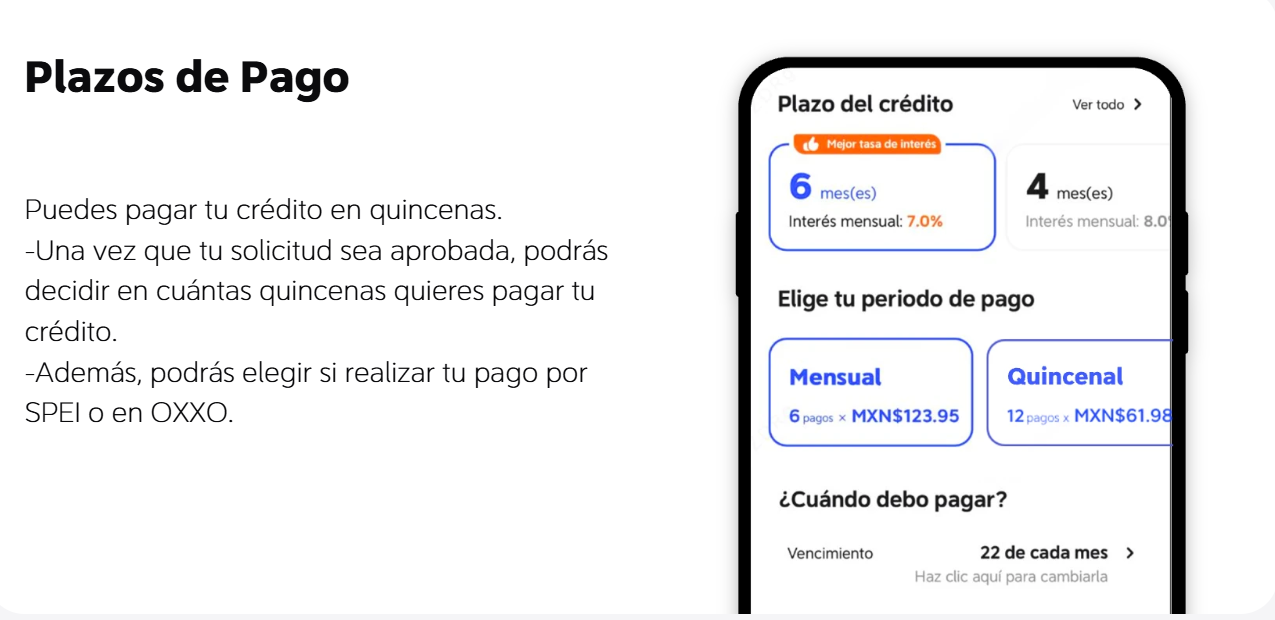
Buy-now-pay-later (BNPL) and prestamos en linea rapidos are liquidity tools, not substitutes for budgeting. Treat BNPL as an installment product: check the APR, verify the total cost across installments, and confirm the provider’s credit underwriting and customer service channels. Use BNPL for planned, value-accretive purchases — for example, replacing a failing appliance that would otherwise increase ongoing costs — rather than for impulse spending. Pay on schedule; missed payments generate fees and negatively affect effective cost of credit — a small oversight can erase months of strategic savings.
Comparing options and common mistakes
Alternatives include low-interest secured loans, rewards credit cards (if you pay in full each month), and increasing liquid savings. Each option has trade-offs in cost, approval speed, and impact on credit. Common mistakes: relying on multiple overlapping installment plans, ignoring the total cost including fees, and using BNPL without adjusting monthly budgets. Avoid stacking short-term products to cover the same expense — that pattern amplifies complexity and the chance of a default event.
Operational checklist before you commit
Run this quick checklist before taking a line of credit or a BNPL plan: confirm the total payable amount; schedule payments aligned to payroll to preserve cash flow; and document the contingency plan if income shortfalls hit. Re-evaluate the plan at 30 and 90 days to ensure the predicted cash-flow benefit translates into real savings. Small governance — a weekly review, an auto-debit aligned to payday — reduces behavioral drift and keeps costs predictable.
Three golden rules for selecting tools and strategies
1) Prioritize total cost transparency: always compare APR plus fees against expected inflation over the same term. If the APR exceeds projected inflation and the purchase is discretionary, defer. 2) Measure cash-flow impact: choose installment sizes that leave at least 10–15% of income for variable needs; maintain an operational buffer. 3) Validate provider reliability: confirm clear billing, accessible customer service, and straightforward dispute resolution — trustworthy underwriting reduces the probability of surprise collections and credit-score issues.
Closing synthesis
Applied conservatively, BNPL and fast online loans provide a pragmatic way to smooth the immediate effects of inflation on household finances while preserving longer-term savings. The metrics above — total cost, cash-flow impact, and provider transparency — create a defensible framework for decision-making. Practical, measurable, ready. DiDi Finanzas