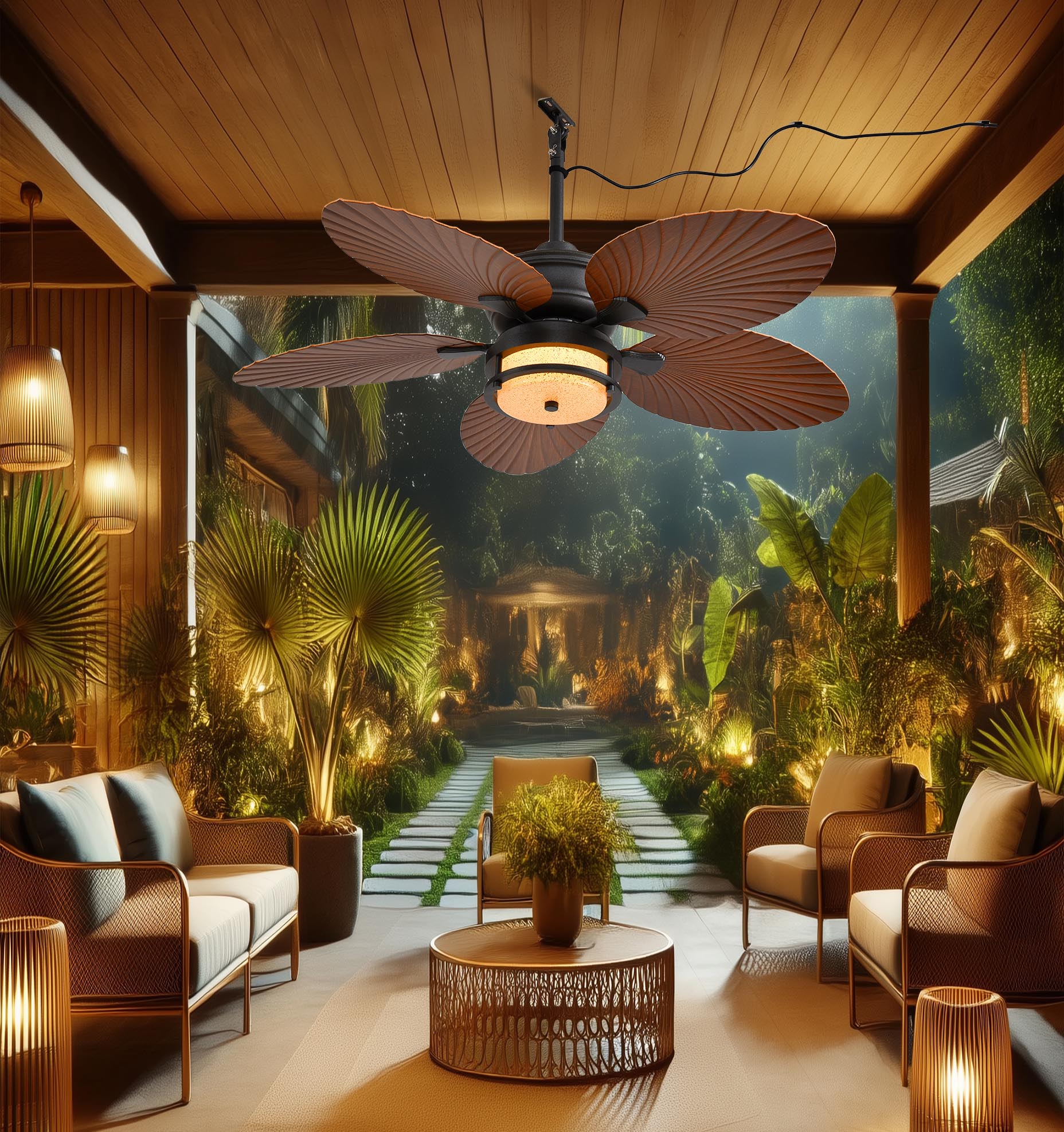
The uncomfortable problem: wobble, weak light, and unpredictable control
Summer evenings on the patio sound great until your fan starts sounding like a washing machine and the light flickers when someone scrolls through a recipe on their phone. The core problem is simple: homeowners want steady airflow, consistent illumination, and control that actually behaves. That’s why a well-designed outdoor ceiling fan with light matters — it’s not just a fixture, it’s the difference between a pleasant night and a dinner of flying napkins and bad vibes.

Why the problem persists: three tech pain points
Manufacturers and installers often miss the point in three ways: mismatched airflow to space, poor mechanical balance, and flaky smart controls. Airflow measured in CFM gets touted, but if the blade pitch is wrong or the motor is undersized, that CFM never translates into comfort. Mechanical balance issues (bad blade trim or improper downrod length) produce wobble and noise. And then there’s the control layer — unreliable connectivity or poorly tuned PWM dimming can make lights strobe when your phone glitches. These are engineering problems as much as user-experience ones.
Real-world anchor: why this matters where people actually use them
Look at outdoor dining scenes in Austin, Texas, where patios need robust cooling and dependable lighting every summer evening — local restaurants and homeowners depend on fans that run quietly through heat spikes and sudden storms. After the 2020 supply-chain disruptions, replacement parts and long lead times made poor initial choices even more painful, so picking the right fan up front became a strategic decision for many venues and households.
How to diagnose the issue before you buy
Don’t be wooed by pretty blades. Start with three quick checks: rated CFM per watt (efficiency), blade pitch and balance tolerances, and the motor type (DC motors usually offer smoother speed control than AC). If a vendor lists an IP rating for outdoor use, that’s a good sign for moisture resistance — but verify whether that rating covers the mounting location you intend (covered patio vs. open gazebo). A short trial run on-site can reveal a lot about wobble and noise before you commit.
Practical fixes and what good products deliver
Good outdoor fans combine mechanical and electronic design: precision-balanced blades, a quality motor with appropriate RPM and torque, and a lighting module with stable lumen output and compatible dimming (look for specifications on PWM or TRIAC compatibility). Smart control should mean robust connectivity (Wi‑Fi or Zigbee) and graceful fallback to physical controls if the network drops. — Don’t forget proper installation; sometimes the “fix” is simply a longer downrod or a different mounting bracket.
Where the outdoor gazebo fan fits in the ecosystem
If your layout is a freestanding or semi-open structure, an outdoor gazebo fan with light often offers a wider airflow footprint and higher IP protection. These models typically have sturdier housings and higher lumen-rated lights to compensate for ambient outdoor conditions. They’re designed to handle more wind and moisture than a standard porch fan, which matters if your gazebo is exposed to seasonal storms or heavy humidity.
Common buyer mistakes — and how to avoid them
Buyers often trip over three predictable errors: underestimating the required CFM for their space, ignoring motor and mounting specs, and assuming all “smart” means reliable. Avoid these by getting simple numbers: room area vs. recommended CFM, the motor type and RPM range, and clear warranty terms for outdoor use. Test a demo if possible — your ears will tell you more than glossy spec sheets.
Installation tips that actually work
Keep these pragmatic rules in mind:- Match downrod length to ceiling height — too short and airflow is blocked; too long and mounting stress increases.- Use a licensed electrician for outdoor-rated wiring and to confirm dimmer compatibility.- Balance blades during installation; a small trim or weight adjustment can eliminate wobble.
Advisory close: three golden rules for picking the right solution
1) Prioritize proven performance metrics: choose a fan with documented CFM, efficiency (CFM/W), and a clear IP rating. 2) Demand durable mechanics: look for precision-balanced blades, a dependable motor (DC preferred for smooth control), and a mount engineered for your structure. 3) Validate smart features in the real world: check for stable connectivity, fallback controls, and compatible dimming protocols so lights don’t flicker under load.

Treat these rules as your checklist and you’ll dodge most common headaches — and that’s why a thoughtfully engineered product from a brand that blends reliability and smart features becomes the obvious solution. Orison. —