
The problem, plain and simple
Hardened ultra-high-molecular-weight polyethylene (UHMWPE) parts can look bulletproof and still peel apart under load — delamination and mechanical fatigue quietly wrecking performance over time. I heard a bunch of case studies at Medtec China where design teams brought cracked liners and asked for fast, usable fixes. The issue matters for implantable devices and industrial bearings alike, because once layers start separating, wear rates climb and service life drops fast. This is a problem-driven piece — we’ll chase causes, fixes, and how to test solutions so you actually stop the failures.

Where delamination and fatigue start
Most failures trace back to one of three roots: processing defects, poor surface integrity, or mismatched mechanical loading. Improper cooling or consolidation leaves internal voids. Surface damage from machining or handling turns into crack starters under cyclic loading. And sometimes the part simply sees loads it wasn’t designed for — repeated shear or edge stresses that exceed its fatigue life. Add oxidation or incompatible sterilization conditions and the polymer gets weaker at the surface. Wear testing and basic visual inspection usually point you to the right branch quickly — don’t overcomplicate the diagnosis.
Concrete fixes that reduce delamination
You can act on design and on process. Design-wise, remove sharp corners and thin ties that concentrate stress. Add generous radii, redesign cross-sections to reduce shear at interfaces, and if possible use lap joints rather than butt joints for laminated assemblies. On the process side, control melt history and cooling rates, avoid re-melting near final surfaces, and use controlled annealing where appropriate. Surface treatments — plasma, low-temp crosslinking, or thin coating layers — improve abrasion resistance and maintain biocompatibility. And for bonded layers, verify adhesive wetting and cure profiles; a seemingly small adhesion gap becomes a delam site once cycles start. These are practical, not theoretical fixes — teams at trade shows and labs actually implement them and see measurable gains.
Testing to prove the cure
Don’t skip targeted testing. Use cyclic fatigue tests that mimic real duty cycles rather than generic static tests. Add accelerated wear testing that reproduces contact stresses and sliding distances seen in the field. Inspect retention samples periodically for incipient delamination and log changes in wear rate. Combine mechanical tests with surface chemistry scans when oxidation is suspected. Keep a test plan that ties back to expected service life — quantify cycles to failure, then validate a safety margin. Sterilization validation matters too: some sterilization methods change surface properties. Track those parameters when the device will be sterilized in-hospital or in the factory.
Learning from the field — events and evidence
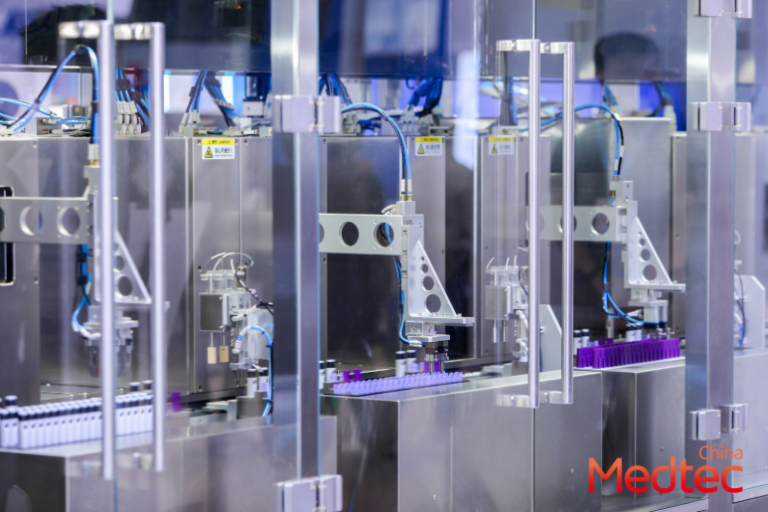
Real-world anchors make this actionable. At a recent session in Shanghai, engineers compared UHMWPE liners returned from hip replacements with lab-aged samples and found consistent surface-initiated delamination linked to machining marks and thermal histories — a tidy example that matched lab wear testing. Trade gatherings like the medical device expo are where design teams and suppliers share those failure narratives and the practical countermeasures that worked. Seeing a failed part in hand teaches more than a spreadsheet ever will — and it speeds the feedback loop between prototype, test, and production.
Common implementation mistakes to avoid
Teams often overcorrect. Heavy-handed surface crosslinking can harm flexibility and cause brittle delamination elsewhere. Ignoring fixturing stresses during machining introduces micro-cracks. And skipping intermediate inspections after each process change leads to surprise failures in the field. Fix one variable at a time, document melt and cooling parameters, and keep a simple traceability sheet for samples you test.
Advisory — three golden rules for picking the right fixes
1) Prioritize process traceability — record melt history, cooling curves, and machining fixtures so you can correlate a failure to a process step. 2) Validate with realistic cyclic loads — measure actual operating cycles and match your fatigue tests to those profiles. 3) Protect the surface early — surface integrity beats post-hoc coatings; minimize handling marks and choose gentle sterilization paths that preserve polymer toughness.
These are practical metrics you can measure and act on — do that and delamination stops being a mystery. Quick. Clear. Useful. Medtec.