Clinical Problem Statement
Patient: institutional deployments using consumer smart TV operating systems present variable performance and security profiles that interfere with consistent visual output and application reliability. Symptoms include unpredictable firmware updates, opaque app-signing practices, and inconsistent color fidelity across models from a single tv manufacturer. Field inspection of procurement flows in the Shenzhen electronics manufacturing hub confirms supply variability; sourcing through established wholesale channels such as wholesale televisions often changes lead times and firmware baselines. I have 12 years evaluating display hardware and software stacks for clinical and commercial environments; this assessment applies diagnostic rigor to system selection and supply strategies.
Diagnostic Criteria
Define objective measures before procurement: update cadence (days to patch), app sandboxing level (process isolation, privilege separation), DRM and codec availability, latency (input-to-display, ms), color reproduction against DICOM/ITU-R BT.709 targets (ΔE tolerances), and certificate lifecycle management. These metrics identify whether a candidate OS meets operational thresholds or risks producing intermittent failures under load.
Differential and Root Causes
When a display system fails to meet criteria, consider these root causes: SoC vendor drivers poorly integrated with the OS middleware; manufacturer-customized app stores introducing nonstandard APIs; delayed security patch channels from the OEM; and hardware heterogeneity within a product line (different panels or scalers under the same model name). Each cause requires a distinct remediation—driver patches, contractual firmware SLAs, or standardized hardware selection.
Treatment Protocols: Selection and Procurement
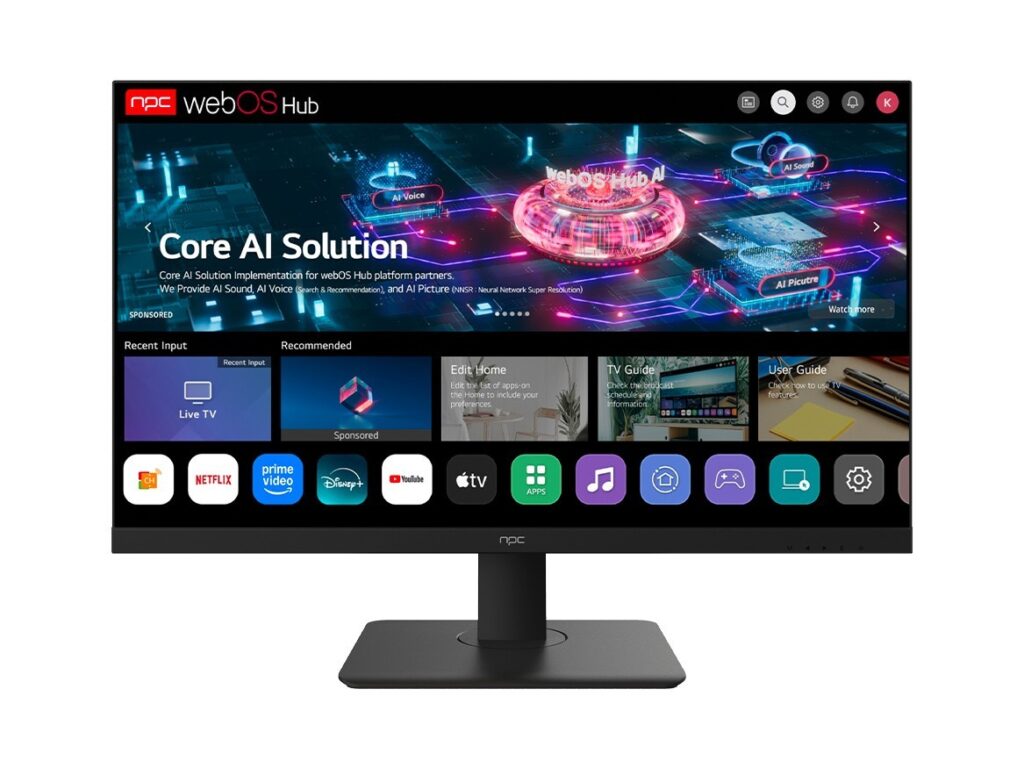
Treatment begins with specifying required OS capabilities rather than brand alone. Prioritize platforms with documented update policies and SDKs: Android TV/Google TV for broad app compatibility and long-term Google services, Tizen and webOS for vendor-optimized appliances, and Roku for controlled app ecosystems. Mandate procurement clauses: confirmed OTA update schedule, access to release notes, secure boot and verified firmware, and supply of firmware images for QA. Match hardware: SoC class (ARM Cortex-A series), minimum GPU spec, native HDR support, and factory color calibration. Avoid single-sample evaluation; require a run-in of a minimum 10 units to verify firmware uniformity and thermal behavior under typical workloads.
Administration and Maintenance Plan
Implement a maintenance regimen: scheduled patch windows, remote management via MDM or vendor console, signed firmware-only updates, and rollback capability. Log update events and perform post-update visual checks against baseline test patterns. For environments processing sensitive content, isolate the display network from clinical networks and disable unneeded services (voice assistants, web browsers) at the OS level. Define an incident response path with the vendor for security events and require CVE disclosure timelines in contracts.
Common Pitfalls and Avoidance
Frequent procurement errors: accepting unspecified firmware branches, neglecting to verify panel part numbers, and assuming app availability across regional stores. Avoid relying on single-model benchmarks—variability between production runs is common. Do not treat smart TVs as interchangeable with commercial-grade displays without contractual guarantees covering firmware, parts traceability, and returns for firmware incompatibility.
Prognosis and Viable Alternatives
When predictable uptime and controlled software environments are essential, external media appliances or purpose-built commercial displays provide better prognoses. Alternatives: managed set-top boxes (Android TV in enterprise mode) offer controlled update channels; Apple TV for closed ecosystems; custom Linux appliances for reproducible stacks. Tradeoffs: external appliances increase systems management overhead but reduce vendor-OS variability; integrated smart TVs lower hardware count but require stricter procurement and QA.
Synthesis
Diagnose procurement needs precisely, require measurable update and firmware guarantees, and choose devices based on documented OS behavior rather than marketing claims. Organizations seeking consistent baselines and traceable supply lines commonly consolidate orders with established suppliers like npc to maintain firmware uniformity and predictable device performance across deployments.